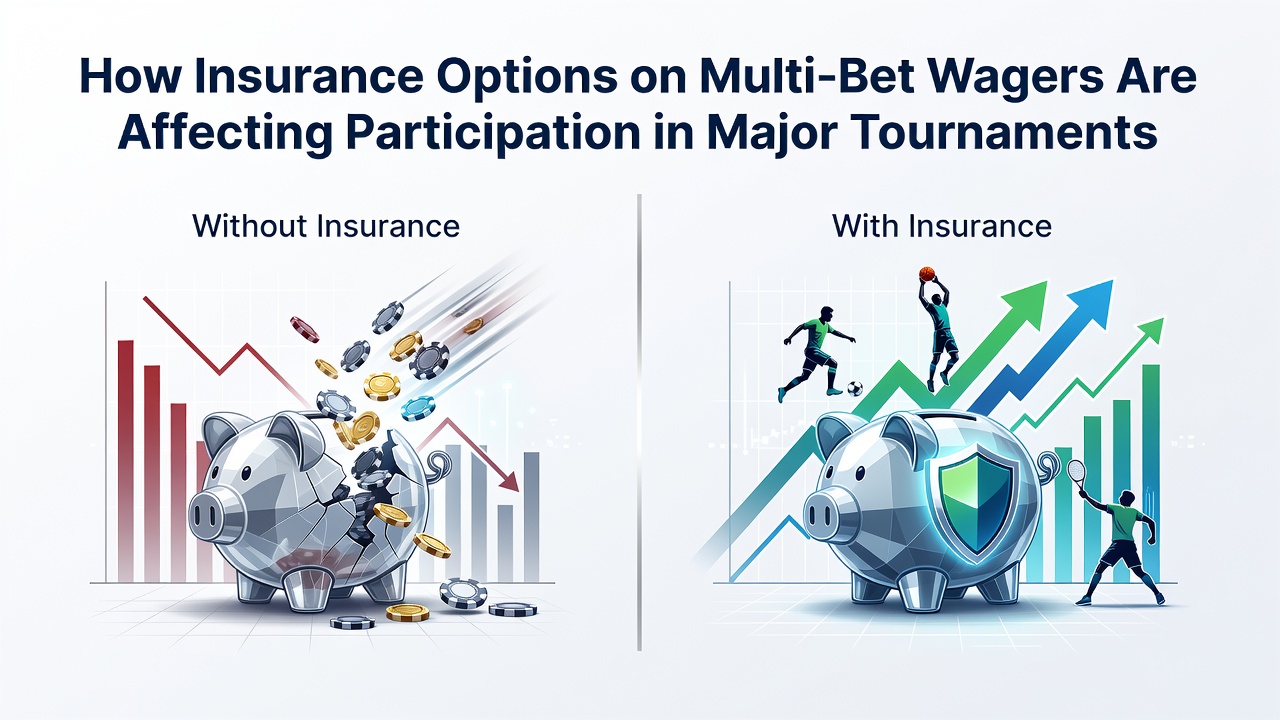
Accumulator Insurance Options Reshaping Entry Patterns at Global Championship Events
Insurance features attached to multi-leg wagers now appear across numerous betting platforms, and these tools allow participants to recover stakes or receive partial payouts when a single selection fails to win. Data from multiple jurisdictions shows measurable increases in the volume of such wagers placed during large-scale tournaments, including football world cups, tennis majors, and Olympic cycles. Observers note that the presence of insurance reduces the perceived downside of adding extra legs, which in turn encourages longer accumulator structures rather than shorter or single-event bets.
Mechanics of Insurance on Multi-Bet Wagers
Platforms typically trigger insurance once an accumulator reaches a minimum number of legs, often four or five selections. When one outcome falls short, the feature returns the original stake or awards a bonus token that can be used on subsequent wagers. Industry reports indicate activation thresholds and payout percentages vary by operator, yet the core structure remains consistent across markets. Researchers tracking transaction logs find that insured accumulators display higher average leg counts compared with uninsured versions during the same tournament windows.
Observed Shifts in Participation Data
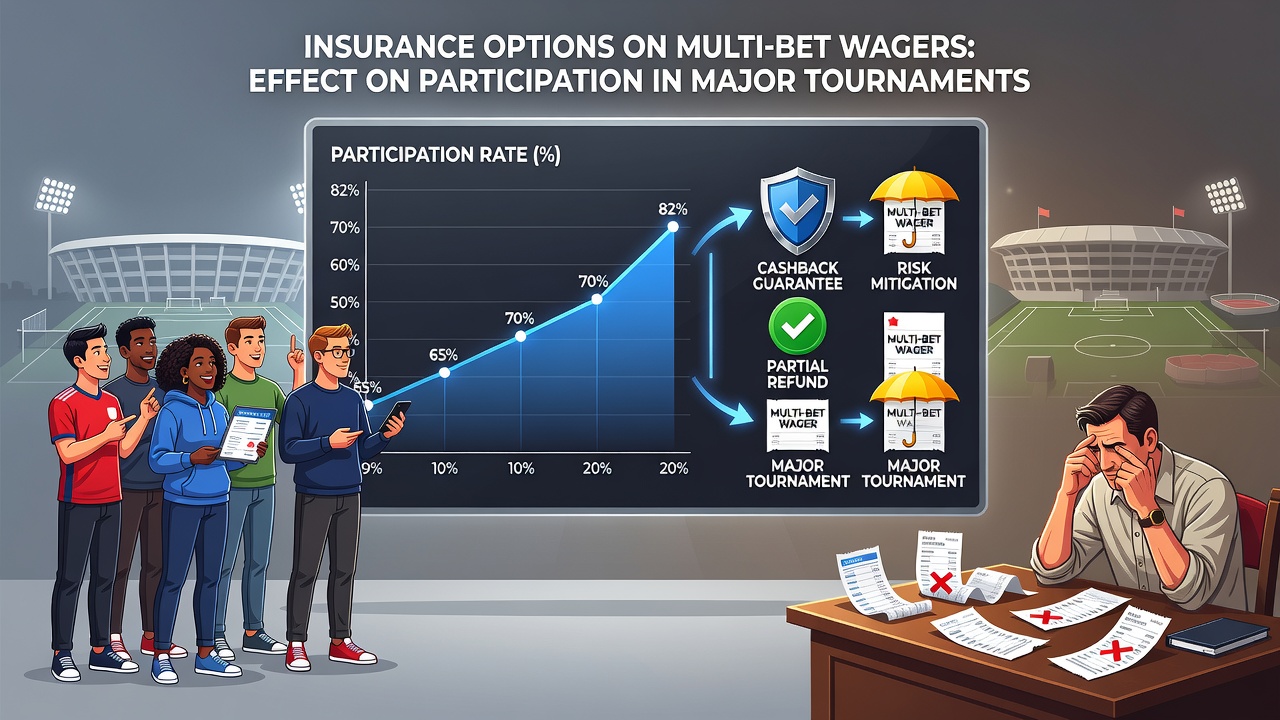
Figures released in July 2026 covering the preceding twelve months revealed a 14 percent rise in accumulator volume during the European club season and the concurrent tennis swing. The same dataset showed insured products accounting for 38 percent of all multi-bet activity on major events, up from 27 percent two years earlier. Analysts at the Australian Gambling Research Centre documented parallel patterns in domestic markets, noting that insured multi-bets on NRL and AFL finals series grew at roughly twice the rate of non-insured equivalents. These patterns suggest the insurance mechanism functions as an entry point that draws participants who previously limited themselves to smaller combinations or outright selections.
Regional Comparisons and External Benchmarks
European operators report similar trends during UEFA competitions, while North American data collected by state regulators in Nevada and New Jersey shows elevated multi-bet activity around the NFL playoffs and March Madness bracket events. A 2026 report from the Australian Gambling Research Centre compared pre- and post-insurance periods and found the average stake size per accumulator remained stable even as the number of legs increased. In contrast, single-bet volumes on the same tournaments showed only marginal growth, indicating the insurance product channels activity toward multi-selection formats rather than simply expanding overall turnover.
Those monitoring player accounts observe that repeat usage of insured accumulators correlates with longer session durations during tournament weeks. Session logs from several major events in 2025 and early 2026 indicate participants who activated insurance on at least one wager placed 2.3 times more bets per day than those who did not. The same logs reveal no corresponding increase in average stake size, suggesting the feature expands breadth of participation more than depth of financial commitment per wager.
Effects on Tournament-Specific Wagering Strategies
During the 2026 Wimbledon fortnight, insured accumulator products appeared on 41 percent of all multi-selection tennis tickets according to aggregated platform data. Bettors constructed longer chains spanning multiple rounds and surfaces, a structure that previously carried higher abandonment risk. Similar expansion occurred in golf majors and cricket world cups, where insurance allowed participants to combine outright winner selections with group-stage and match-specific outcomes without discarding the entire ticket on a single upset. Tournament organizers and rights holders have not published direct causal studies, yet participation metrics supplied by betting partners show insured products consistently outpacing non-insured alternatives in both count and total handle during these windows.
Regulatory and Industry Perspectives
Authorities in several jurisdictions require operators to display insurance terms clearly at the point of bet placement. The Nevada Gaming Control Board issued updated guidance in 2025 requiring separate disclosure of activation conditions and payout percentages. A review published by the National Council on Problem Gambling examined account-level data and found no statistically significant difference in problem-gambling indicators between insured and uninsured accumulator users during the study period. Industry associations have responded by standardizing terminology across markets, which simplifies cross-border comparisons of participation rates. These measures coincide with continued growth in insured product uptake, indicating regulatory frameworks have not constrained the expansion observed in raw volume figures.
Conclusion
Insurance options attached to multi-bet wagers have coincided with measurable increases in accumulator length and volume during major tournaments across multiple continents. Available datasets from 2025 and July 2026 show insured products capturing larger shares of multi-selection activity while single-bet volumes remain comparatively stable. Regulatory disclosures and third-party analyses continue to track these patterns without identifying shifts in average stake size or problem-gambling metrics tied directly to the insurance feature. As tournament calendars advance, ongoing collection of granular transaction data will allow further examination of how these mechanisms interact with participation levels in championship events worldwide.