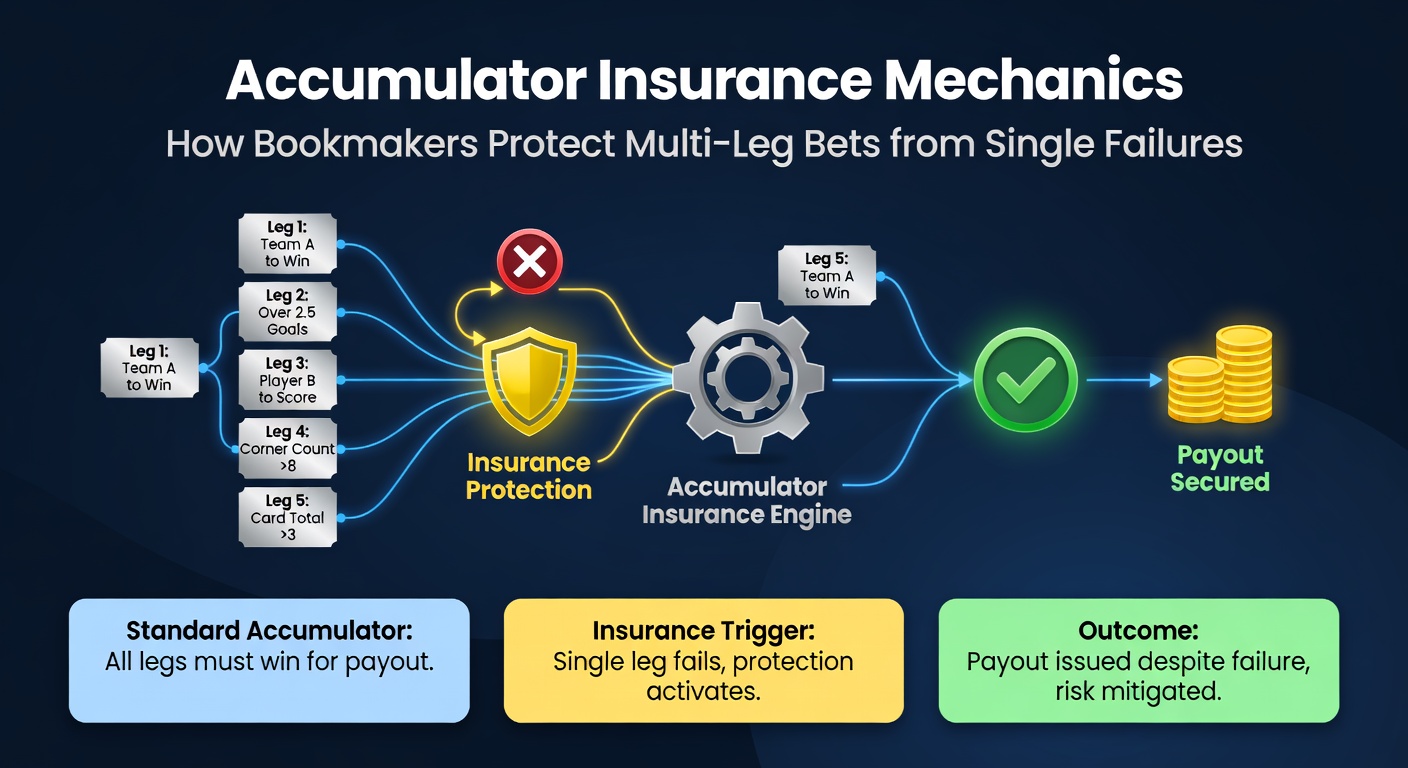
Accumulator Insurance Frameworks: Bookmaker Approaches to Managing Multi-Leg Bet Risks
Accumulator bets combine multiple selections into one wager, and operators have developed insurance mechanisms that refund stakes when a single leg fails while the rest succeed. These structures emerged from risk assessment models that calculate probability distributions across combined events, allowing bookmakers to offset potential losses through adjusted pricing and hedging strategies. Data from global betting markets indicates steady growth in such offerings, particularly as multi-leg products gained traction in football and horse racing sectors.
Core Components of Accumulator Insurance Structures
Operators structure accumulator insurance around predefined triggers, typically a single losing selection within an otherwise winning ticket, and they determine payouts via formulas that factor in the number of legs, the odds range, and historical failure rates for similar combinations. Research from the University of Nevada Las Vegas Center for Gaming Research shows these calculations rely on statistical modeling to set thresholds where insurance activates without eroding overall margins. Bookmakers integrate these features into their platforms by tagging eligible accumulators at the point of placement, with automatic verification systems that scan results in real time once events conclude.
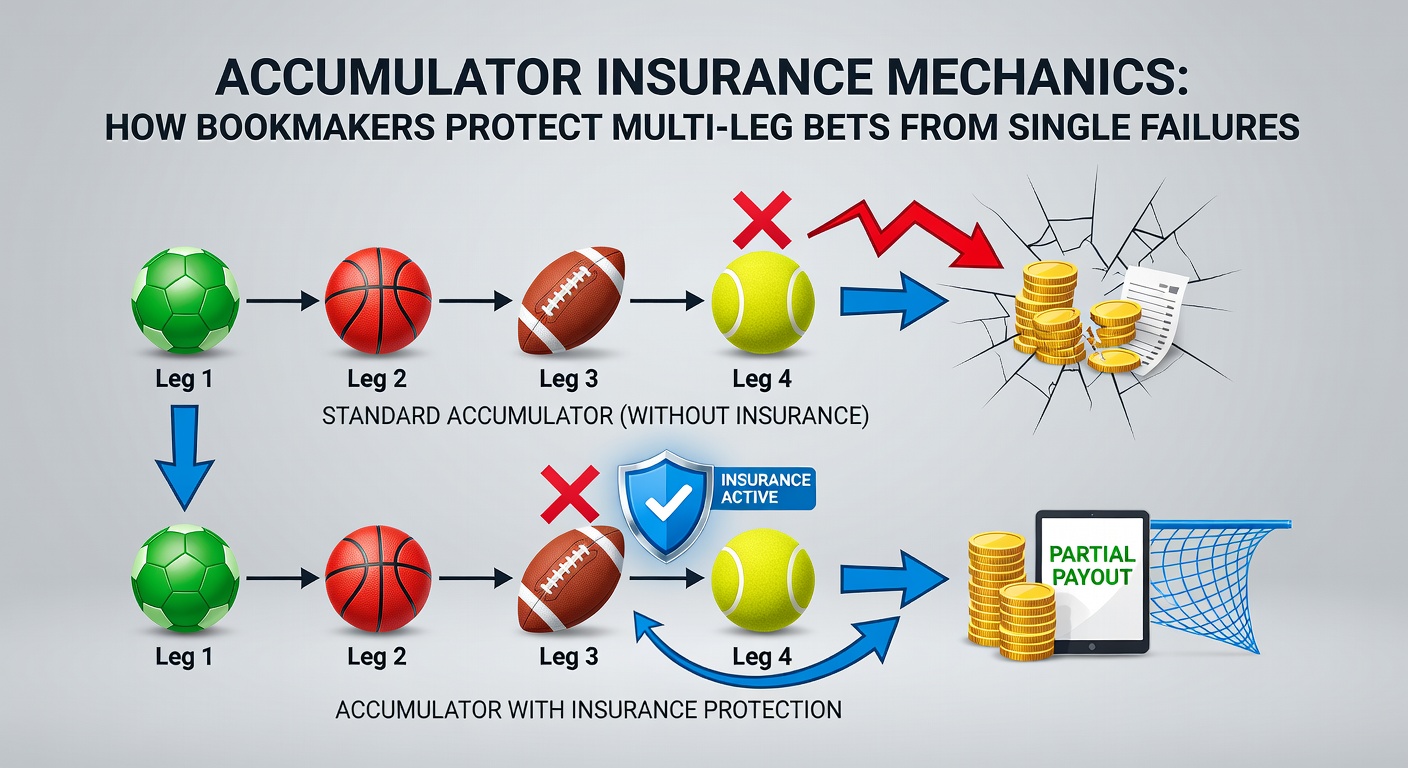
Insurance terms vary by market and operator, yet common patterns include partial stake returns scaled to the number of legs or fixed cashback amounts applied when conditions are met. In practice, these protections operate alongside standard accumulator rules, which means the insurance component activates only after all selections are graded and one failure is confirmed. Observers note that this layered approach helps maintain bet volume because participants can pursue larger payouts while limiting exposure on individual outcomes.
Risk Management Techniques Employed by Operators
Bookmakers protect their positions through a combination of odds adjustments, liability caps, and portfolio balancing across thousands of active tickets. They monitor live exposure on multi-leg products and apply dynamic pricing that accounts for correlated risks, such as matches within the same league or events affected by weather patterns. According to reports from the Australian Institute of Criminology, effective risk controls in this area depend on real-time data feeds and automated hedging tools that redistribute liability to other market segments or reinsurance partners.
Systems often incorporate minimum odds requirements and leg-count thresholds before insurance eligibility applies, which narrows the scenarios where refunds occur. This selective design allows operators to offer the feature on higher-margin accumulators while restricting it on low-odds combinations that carry different risk profiles. Data compiled across European and North American platforms reveals that these parameters have been refined over successive seasons to align with observed betting patterns and event outcomes.
Implementation Across Different Betting Markets
Regional differences appear in how accumulator insurance is presented and regulated. In Ontario, the Alcohol and Gaming Commission oversees disclosure requirements that mandate clear explanation of insurance terms before bet confirmation. Platforms operating in that jurisdiction display eligibility criteria and payout examples at the selection stage, ensuring participants understand activation conditions. Similar transparency standards exist in several Australian states, where operators must report aggregate insurance payout volumes to state authorities as part of ongoing compliance reviews.
Technology plays a central role in scaling these offerings, with backend engines that cross-reference results against insurance rules within minutes of event settlement. Integration with third-party data providers allows simultaneous grading of multiple sports and leagues, reducing delays that once limited insurance availability on same-day accumulators. Figures released by the European Gaming and Betting Association indicate broader adoption of these automated systems between 2024 and 2026, coinciding with expanded mobile betting volumes.
Developments Observed Through May 2026
By May 2026, several operators introduced tiered insurance levels that scale refund percentages according to the total number of legs in an accumulator. These updates followed internal analyses showing increased participation when protection extended to five-leg and six-leg tickets. Industry reports highlight that such expansions coincided with new fixtures calendars and tournament schedules, which created fresh opportunities for multi-leg combinations across football and tennis markets.
Operators continue to refine eligibility windows and minimum stake requirements in response to participation data. Some markets now test insurance that covers two losing legs within larger accumulators, although these variants remain limited to specific sports and time periods. Tracking by research groups shows these experiments have produced measurable shifts in average ticket sizes without corresponding increases in overall loss ratios for the operators involved.
Conclusion
Accumulator insurance operates through defined triggers, statistical pricing, and automated verification that together allow bookmakers to extend protection on multi-leg bets while managing their own exposure. Regulatory frameworks in multiple jurisdictions require transparent presentation of these terms, and technological systems enable consistent application across diverse sports and event types. Ongoing adjustments through 2026 reflect continued calibration based on observed patterns in betting activity and outcome distributions.